





























































































Oil catch tanks
Oil catch tanks are used in the car’s crankcase ventilation system to collect oil vapours, condensation and impurities from blow-by gases before they are routed back into the intake or out through the system. They are especially relevant on turbo cars, optimised road cars and motorsport projects where better control of air and oil vapours in the engine’s ventilation system is desired. An oil catch tank can be an advantage on both standard engines and more demanding setups, but is often particularly relevant on cars with higher boost pressure, increased load or older engines with more blow-by.
The purpose of an oil catch tank is to help keep the intake system, boost pipes, intercooler and other components cleaner by reducing the amount of oil and vapour carried through the system. This can help reduce oil deposits in the intake and provide a more controlled solution in engines where the crankcase ventilation system is under more strain than in standard use. In some setups, they are also used as part of a more developed solution for ventilation of the valve cover, engine block or tank venting.
Oil catch tanks are available in several different versions, sizes and designs. Some are simple tanks with connections, while others are built with internal baffling, filter media, separator functions or a drain plug for easier emptying. The right choice depends among other things on the engine setup, how much blow-by is expected, how the hoses need to be routed and how much space is available in the engine bay. On some cars a compact solution is preferred, while other projects require larger tanks with multiple ports or a more advanced internal design.
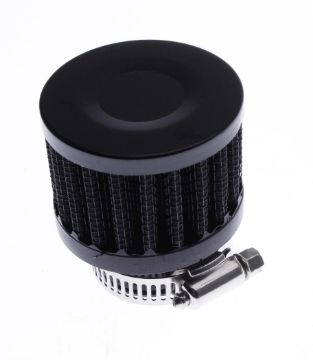
Air filter mini 25mm. connection
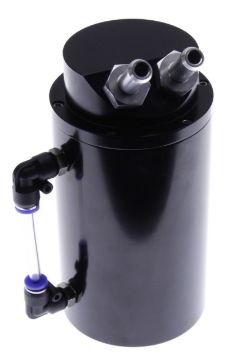
Oil catch tank - Round Black

Catch tank with large filter - High flow


Qualitec - Catch tank - 3 studs

Catch tank flange for TFSI engine - AN10

VAG 2.0 TFSI - Oil catch tank

BMW Oil catch tank - BMW N54 135i,335i & 535i


Air filter mini 35mm. connection

Qualitec - High performance catch tank - Medium - Silver

Qualitec - High performance catch tank - Big - Black


Qualitec - Catch tank billet - Silver

Oil catch tank - Round Blue


Oil catch tank - Square Blue


Universal fuel surge tank 3L

Qualitec - Catch tank - 2 studs - 0,5 liters

Oil Catch Tank System Kit for EA888 2.0 TSI / TFSI – Audi / VW / VAG CCTA / CBFA

Catch tank flange for TFSI engine - AN10 - with 2 plugs

Competition Catch Can 0,5L - Nuke Performance


Performance Catch Can 0.75L - Nuke Performance


Qualitec - High performance catch tank - Grande - Black

Universal fuel surge tank 4L

BMW Oil catch tank - BMW N20 F20/F30 135i/220i/320i/328i/420i/428i


Catch tank - 2l - 3/8" NPT ports

Competition Catch Can 1,0L - Nuke Performance


GM LSX Aluminum Ticket PCV Catch Tank - Silver


Oil catch tank - Round Silver

Qualitec - High performance catch tank

Universal breather tank (550ml)


Universal fuel surge tank 1L


