




















































































Regulators
Fuel pressure regulators are an important part of the fuel system and are used to control as well as stabilize the fuel pressure to the engine. Whether you are building a street car, a race car or a complete motorsport project, correct fuel pressure is crucial to ensure that the engine receives the right amount of fuel during idle, load and full acceleration. A fuel pressure regulator is therefore not just a detail in the setup, but a central component for reliability, engine operation and performance.
In a standard or modified fuel system, the regulator ensures that the pressure is kept stable in relation to the setup the engine is running with. This is especially important on cars with larger fuel pumps, changed injectors, fuel rail, aftermarket engine management or turbo and supercharger setups, where the demands on the fuel supply are higher than on a standard car. If the fuel pressure is not correct, it can cause poor engine operation, unstable idle, an overly rich or overly lean mixture and, in the worst case, lead to serious engine problems.
Many people choose an adjustable fuel pressure regulator when modifying the fuel system. This makes it possible to fine-tune the pressure so that it matches the injectors, pump, engine management and the power target the car is built for. On a tuned or custom-built car, it is often necessary to be able to adjust the system precisely, and here a regulator is a natural part of a proper setup. For motorsport and high-performance projects, it is also important to choose a model with good flow capacity, precise regulation and materials that can withstand the fuel and pressure level the car is running with.
Fuel pressure regulators are available in several types, including for return systems and returnless solutions, as well as in variants with vacuum or boost reference. A vacuum or boost referenced regulator can raise or lower the pressure in relation to load, so the fuel pressure follows the engine’s needs more precisely. This is especially relevant on turbo cars and other setups where the load changes quickly and where stable differential pressure across the injectors is important for correct injection.
When choosing a fuel pressure regulator, it is important to look at more than just thread type and design. Flow, pressure range, connections, compatibility with petrol, ethanol and E85, as well as how it works with the rest of the fuel system, are all very important. An incorrect regulator can restrict flow or cause unstable regulation, while a correctly chosen solution helps create a safer and better-functioning fuel system.
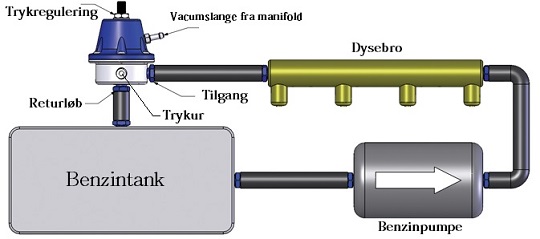
When installing an adjustable petrol pressure regulator, it is important that all threads and connections are sealed correctly. Thread sealant or thread locker is often used here, for example from Loctite, so the connections become tight and reliable. Before the fuel pump is connected, the pressure adjustment should always be turned all the way down to minimum. This helps prevent the system from starting with excessively high fuel pressure. The inlet to the regulator is normally located on the same side as the connection for the pressure gauge. Fuel pressure normally sits around 3 bar, but on some cars it can vary from approximately 2.5 to 4 bar. Therefore, it is important to check what fuel pressure the car originally runs with before adjusting the regulator.

4 bar fuel pressure regulator VAG

Qualitec EFI fuel pressure regulator with 8 millimeter hose barb fittings

Qualitec fuel pressure regulator 2x AN6 ORB / 1x AN6 ORB black

Qualitec EFI fuel pressure regulator 2x AN6 / 1x AN6 with fittings

Fuel rail adapter for Toyota & Subaru AN6

Qualitec carburettor fuel pressure regulator 2x AN6 / 1x AN6 red/silver

Qualitec fuel pressure regulator 2x AN8 ORB / 1x AN6 ORB black

Turbosmart FPR6 EFI fuel pressure regulator 2x AN6 / 1x AN6 black

Aeromotive Extreme Flow EFI fuel pressure regulator 2x AN10 ORB / 1x AN10 ORB black

Fuel rail adapter for Mazda, Nissan & Subaru AN6

Nuke Performance FPR100m EFI fuel pressure regulator 2x AN8 ORB / 1x AN8 ORB

Turbosmart FPR6 EFI fuel pressure regulator 2x AN6 / 1x AN6 black/silver

Qualitec carburettor fuel pressure regulator 2x AN6 / 1x AN6 black

Qualitec fuel pressure regulator 2x AN8 ORB / 1x AN6 ORB red/silver

Qualitec EFI & carburettor fuel pressure regulator 2x AN6 / 1x AN6

Radium Engineering fuel pulse damper FPD-R 8AN ORB kit

AEM 25-302BK EFI fuel pressure regulator 2x AN6 ORB / 1x AN6 ORB

Nuke Performance FPR100s EFI fuel pressure regulator 2x AN6 ORB / 1x AN6 ORB

Qualitec high pressure fuel pressure regulator 2x AN6 / 1x AN6 with fittings and gauge plug

Aeromotive universal return style EFI fuel pressure regulator 3/8" NPT black/red

Aeromotive A1000 EFI fuel pressure regulator 2x AN6 ORB / 1x AN6 ORB red/silver

Qualitec high pressure fuel pressure regulator with 8 mm hose fittings and gauge plug

Fuelab 52501 EFI inline fuel pressure regulator 1x AN6 ORB / 1x AN6 ORB

Fuel rail adapter for Mitsubishi AN6

Qualitec EFI fuel pressure regulator 2x AN6 / 1x AN6

Radium Engineering Subaru EJ fuel rail plumbing kit

Progressive 2:1 fuel pressure regulator

Turbosmart FPR8 EFI fuel pressure regulator 2x AN8 / 1x AN8 black/silver

AEM 25-300BK EFI fuel pressure regulator inline 2x AN6 ORB / 1x AN6 ORB

AEM 25-301BK EFI fuel pressure regulator offset 2x AN6 ORB / 1x AN6 ORB

AEM 25-303BK inline EFI fuel pressure regulator 2x AN6 ORB / 1x AN6 ORB

AEM 25-304BK EFI fuel pressure regulator offset 2x AN6 ORB / 1x AN6 ORB

AEM 90° banjo fitting kit for EFI fuel pressure regulator

AEM rebuild kit for EFI fuel pressure regulator

Aeromotive A1000 EFI fuel pressure regulator 2x AN6 ORB / 1x AN6 ORB black

Aeromotive X1 Series EFI fuel pressure regulator 2x AN8 ORB / 1x AN8 ORB black

DeatschWerks DWR1000 fuel pressure regulator 4x AN8 ORB / 1x AN6 ORB

Fuelab 51502 EFI fuel pressure regulator 2x AN6 ORB / 1x AN6 ORB

Fuelab 53501 EFI mini fuel pressure regulator 2x AN6 ORB / 1x AN6 ORB

Fuelab 56504 EFI high-flow fuel pressure regulator 2x AN10 ORB / 1x AN10 ORB

GFB FX-S 8051 Bosch clip-in EFI fuel pressure regulator

Nuke Performance FPR100x EFI fuel pressure regulator 2x AN10 ORB / 1x AN10 ORB

Progressive 3:1 fuel pressure regulator

Qualitec fuel pressure regulator 2x AN6 ORB / 1x AN6 ORB red/silver

Qualitec high pressure fuel pressure regulator 2x AN6 / 1x AN6 with fittings

Qualitec high pressure fuel pressure regulator 2x AN8 / 1x AN8 with fittings

Radium Engineering Subaru EJ parallel fuel rail plumbing kit

SPA Turbo EFI fuel pressure regulator BMW




